Award Nominated Investigation professional | Supporting resolution in complex and sensitive situations
Why digital information has become an essential part of modern investigative work
When people hear the term digital investigation, they often imagine something highly technical.
They picture computer specialists analysing code, recovering deleted files, or monitoring online activity in ways that feel far removed from everyday life.
The reality is usually rather different.
Most of us leave behind a multitude of digital footprints every day. Emails are sent. Messages are exchanged across platforms such as WhatsApp and Telegram. Online accounts are accessed. Public information is updated. Devices record locations, activity and interactions.
Individually, these digital traces may appear insignificant.
Collectively, however, they can provide valuable context when attempting to understand events, establish timelines or bring clarity to complex situations.
Over the years, one thing has become increasingly clear: digital information now plays a central role in many investigations, whether the matter is personal, commercial, reputational or financial.
Technology has transformed the way people communicate, conduct business, manage relationships and organise their lives. Inevitably, it has also transformed the way modern investigations are undertaken.
The digital footprint we all leave behind
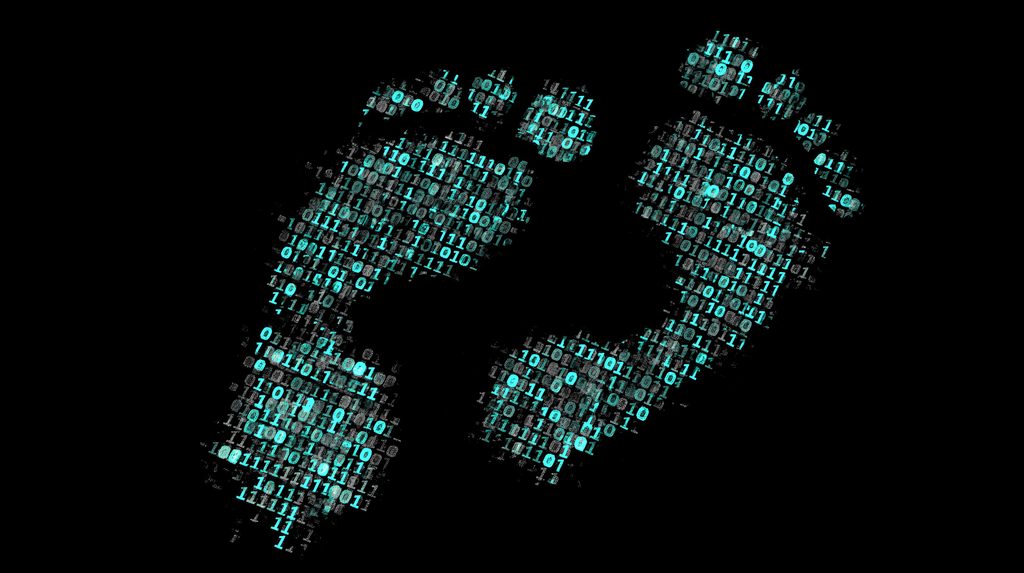
Most people underestimate the volume of information they generate.
Every email sent, social media interaction, online purchase and digital account creates data—some permanent, some semi-permanent, much of it forgotten almost as soon as it is created.
This does not mean that every piece of information is relevant. Far from it.
The challenge is rarely locating information. The challenge lies in understanding what matters and placing it within the appropriate context.
An isolated digital event may reveal very little. A pattern of activity observed over time can tell a very different story.
This is where experience becomes important.
Digital investigations are rarely about uncovering a single dramatic piece of evidence. More often, they involve assembling a clearer picture from numerous small details that, when viewed collectively, begin to establish context and understanding.
Establishing timelines
One of the most valuable functions of digital investigation is its ability to establish reliable timelines.
People often remember events differently. Conversations become blurred. Dates become uncertain. Assumptions begin to fill the gaps in memory.
Digital information can help reduce that uncertainty.
Emails, account activity, communication records, online interactions, publicly available information and digital documentation may all contribute to constructing a more accurate chronology of events.
In many situations, clarity emerges not from a single discovery but from understanding the sequence in which events occurred.
Once reliable timelines begin to take shape, decisions can often be made with far greater confidence.
Facts versus assumptions
One of the recurring themes throughout investigative work is the tension between facts and assumptions.
When people face uncertainty, the mind naturally attempts to complete the picture.
We fill gaps with theories. We interpret incomplete information. We draw conclusions based on limited evidence.
Sometimes those assumptions prove accurate.
Sometimes they do not.
Digital investigations help reduce uncertainty by introducing objective information into situations that might otherwise be dominated by speculation.
That does not mean every question immediately receives an answer.
However, establishing what can be verified often allows people to move away from assumption and towards informed decision-making.
In my experience, that shift alone can be enormously valuable.
Digital information rarely exists in isolation
One common misconception is that digital investigations take place entirely online.
In reality, digital intelligence is usually just one component of a broader investigative process.
A piece of digital information may support a timeline. It may confirm a movement, communication or interaction. It may help explain behaviour that otherwise appears inconsistent.
However, digital evidence becomes most valuable when considered alongside other sources of information and understood within a wider context.
This is why experienced investigators rarely focus on individual data points alone.
The objective is not simply to gather information.
The objective is to understand what that information actually means.
The importance of context
Context is everything.
The same digital activity can carry very different meanings depending upon the surrounding circumstances.
An online interaction may appear significant until it is viewed alongside other evidence. A communication may seem suspicious until a broader timeline has been established.
Without context, information can easily be misunderstood.
This is one of the reasons why digital investigations require careful assessment rather than hurried conclusions.
Good investigative work is rarely about confirming suspicions.
It is about understanding reality as accurately as possible.
Digital investigations and reputation
Increasingly, digital information plays an important role in matters involving reputation.
Personal relationships, business disputes, online communications, social media activity and public perception are now shaped, to a considerable extent, by digital platforms.
Understanding digital activity can often help explain how reputational issues have developed, how information has spread, or how events have unfolded over time.
For high-profile individuals, business owners, senior professionals and those with public visibility, these considerations have become increasingly important.
The speed at which information now travels means that clarity is often required quickly.
A measured approach
One of the misconceptions surrounding digital investigations is that they are intrusive by nature.
Professional digital investigations should always be lawful, proportionate and carefully considered.
The objective is not to invade privacy or pursue information unnecessarily.
The objective is to understand situations more clearly.
As with every form of investigation, judgement matters.
Not every question requires an extensive enquiry. Not every digital trail is relevant.
Experience helps determine what should be explored, what should be disregarded and where genuine value is likely to be found.
Technology continues to evolve
The digital landscape continues to change at remarkable speed.
New platforms emerge. Methods of communication evolve. People adopt new technologies and behaviours.
Despite these developments, one thing remains surprisingly consistent.
Human behaviour.
The platforms may change, but the motivations, decisions, relationships, pressures and vulnerabilities that sit behind the technology remain fundamentally human.
This is why digital investigations are not really about technology alone.
They are about understanding people.
Technology simply provides another lens through which that understanding can be developed.
Clarity in an increasingly digital world
As more of life moves online, digital information will continue to play an increasingly important role in investigative work.
Yet the purpose of digital investigation remains unchanged.
It is not simply to uncover information, but to establish facts, reduce uncertainty and provide clarity where speculation and assumption once existed.
In many cases, the greatest value lies not in the technology itself, but in the judgement required to interpret what that technology reveals.
Because, ultimately, digital evidence only becomes useful when it helps people understand what has actually happened—and decide, with confidence, what should happen next.
To explore more articles and insights on investigations, reputation and complex private matters, visit www.researchassociates.com.
Call Now to Talk Through your Situation
Whether you require discreet surveillance, background checks, blackmail investigations, or corporate intelligence, our experienced investigators are here to assist.